



Alarms & Events Agent
Turns Utility’s Alarm Noise into Operational Intelligence
Themis Alarms & Events Agent turns historical and real-time SCADA alarm and event history data into triage, noise detection, operational KPIs, and reliability insight.
What is Themis Alarms and Events Agent?
Unveil the Story Behind Every Alarm and Event
An intelligence layer on top of SCADA that turns the alarm and event history a utility already produces into triage, KPIs, noise filtering, and reliability insight. Detects recurring noise and bad actors, derives operational KPIs, and helps different utility roles ask questions about what happened. Read-only, runs on the exports you already generate with no new infrastructure.
The Agent can analyze historical SCADA exports and approved data connections, or continuously monitor real-time SCADA data through replicator databases or SCADA APIs.
Why consider Themis Alarms and Events Agent for your Utility?
From Alarm Noise to Context
Alarm history data contains reliability and maintenance insights that go unused within most utilities
Major events can create alarm floods that require extensive reporting and analysis, which is difficult now
Manual spreadsheets and one-off reports to study alarms aren’t scalable
Teams often need to manually rebuild the sequence of events to analyze the root cause which is a painful process
What does the Agent do with your alarm history?
Alarms and Events Agent Unlocks Capabilities Beyond Traditional Alarm Management
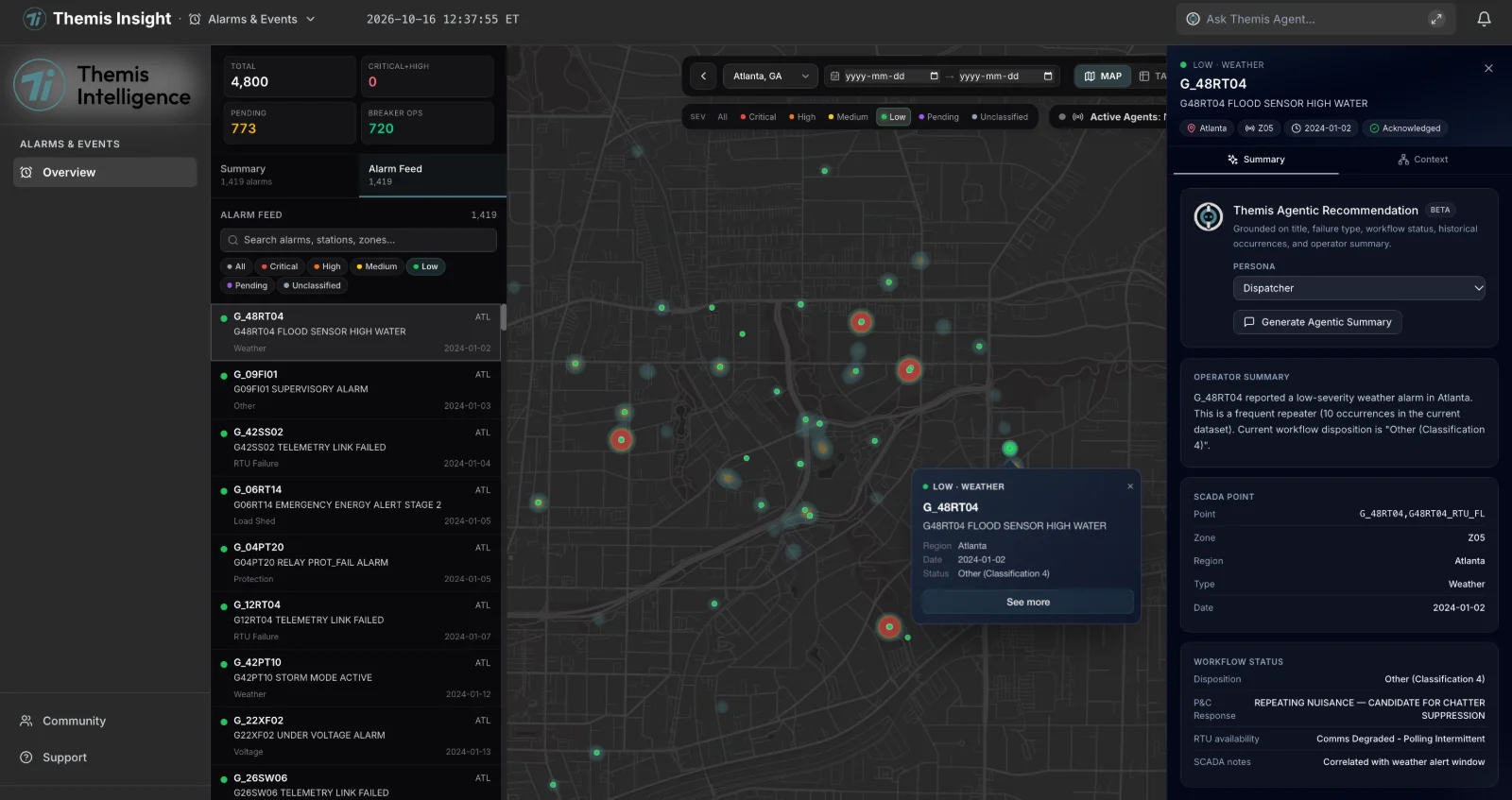
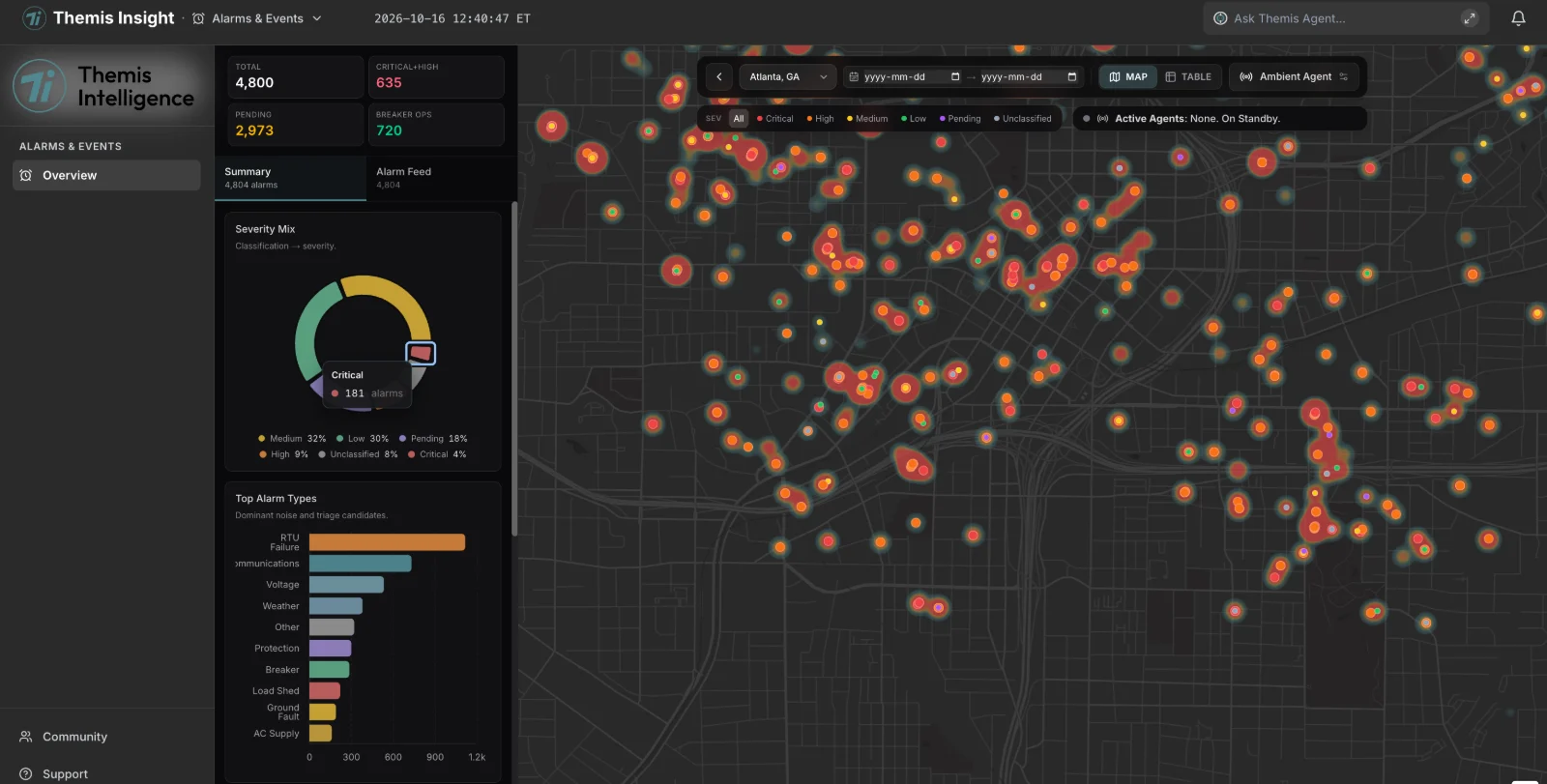
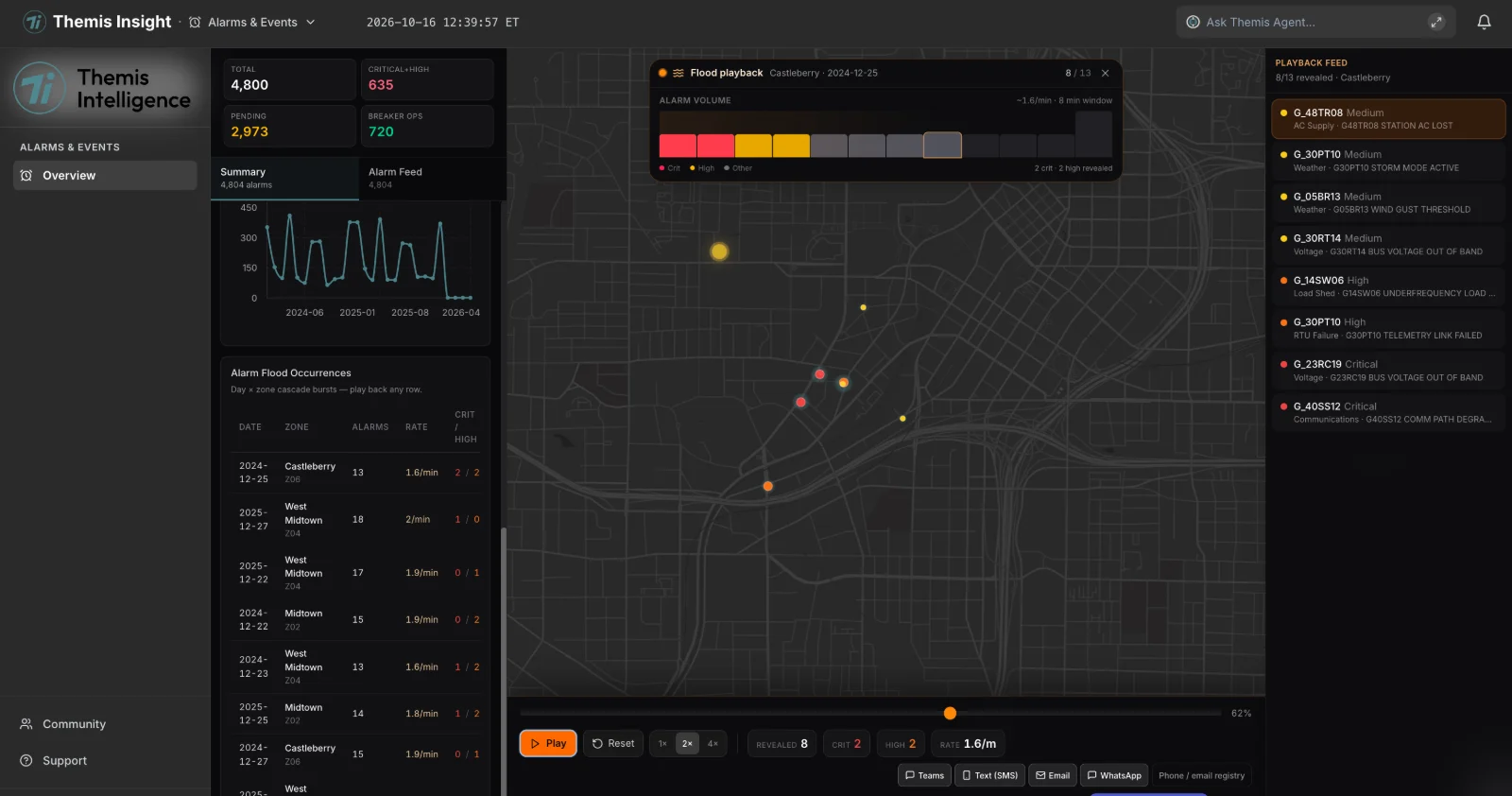
What can utilities do with the Themis Alarms and Events agent?
Alarms and Events Agent Can Transform Utility Workflows

Reconstruct alarm and event sequences to help teams understand what happened and what requires follow-up.

Generate consistent KPI views and summaries without requiring an analyst to rebuild the event history each time.

Use recurring fault and alarm patterns as supporting evidence when deciding where maintenance or capital attention may be needed.

Use persona-aware summaries to help utility workforce explore an event from different perspectives.

Ask questions in plain language to a utility-trained LLM agent
Delivery Model
An isolated, cloud-first environment with safe and secure access.
Deployed inside the utility’s own infrastructure for advanced environments.
Cloud services combined with on-premises data residency where required.
Alarms and Events Agent Scope
The Alarms & Events Agent is delivered as a read-only intelligence layer alongside the existing SCADA environment. It can begin with historical data exports or by reading directly from a replicator SCADA database and does not require new control-room hardware or write access to SCADA.
Frequently asked questions
See what your alarm data has been trying to tell you
Send us three months of alarm history and we will show you the chatter, the bad actors, and the patterns underneath it.