



Load Forecasting
Modern Load Forecasting solution for a Dynamic Distribution Grid
Themis Load Forecasting delivers automated, explainable demand forecasts for utility operations and short-horizon planning - from hours ahead to days ahead
What is Themis Load Forecasting?
See what your grid will need next
Themis Load Forecasting is an automated forecasting solution predicting short-term and medium-term load demand for utility operations at defined grid points. Designed to achieve lower MAPE than conventional forecasting baselines used across ISO, RTO, and TSO environments.
Why Consider Themis Load Forecasting for your Utility?
Operational Intelligence Beyond the Forecast
Traditional forecasting tools were built for static conditions, not real-time operations where extreme weather and rapid topology changes can quickly shift system behaviour.
As bi-directional power flow becomes more common, operations teams need forecasts that are explainable and defensible, not just accurate.
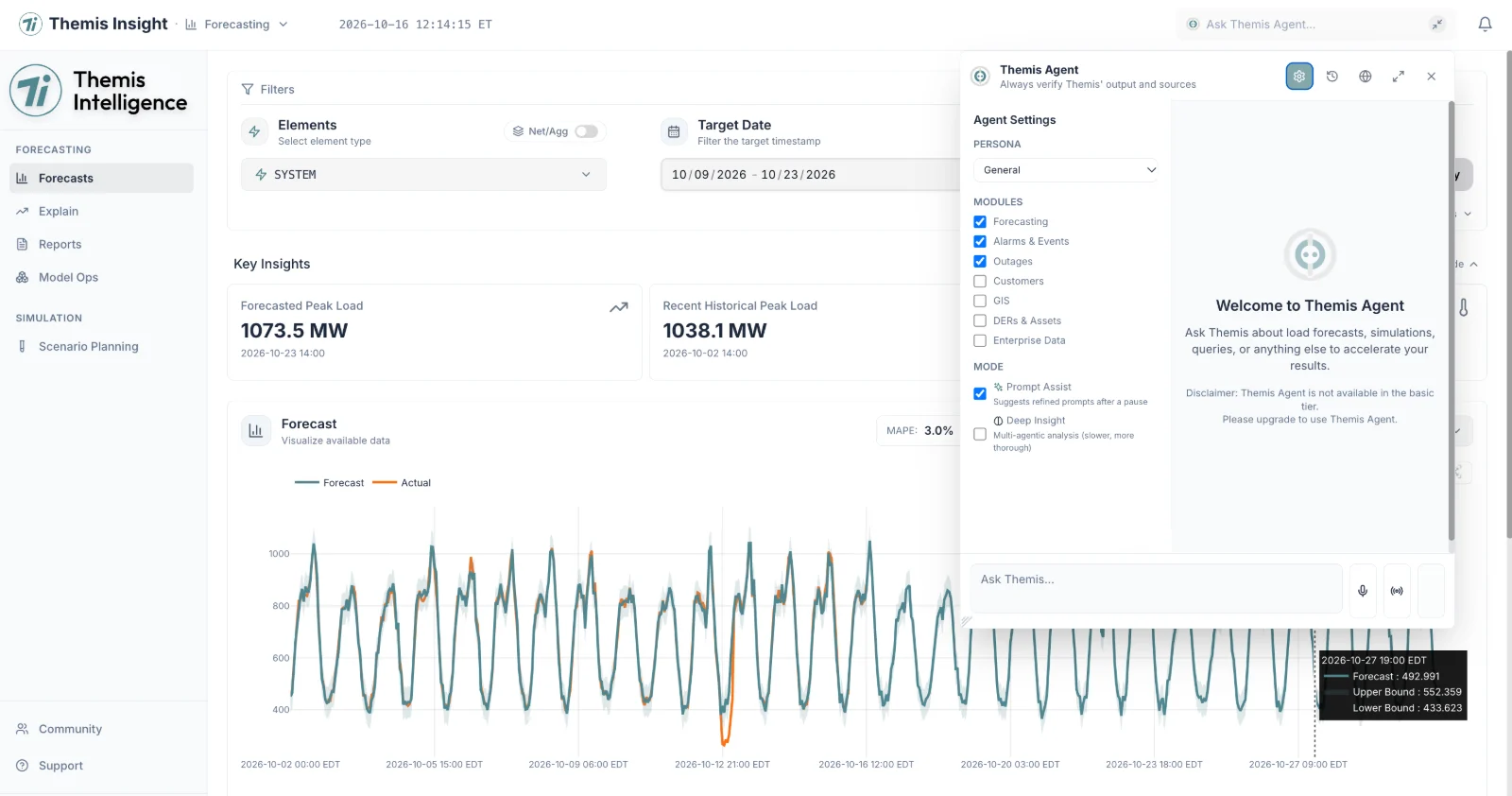
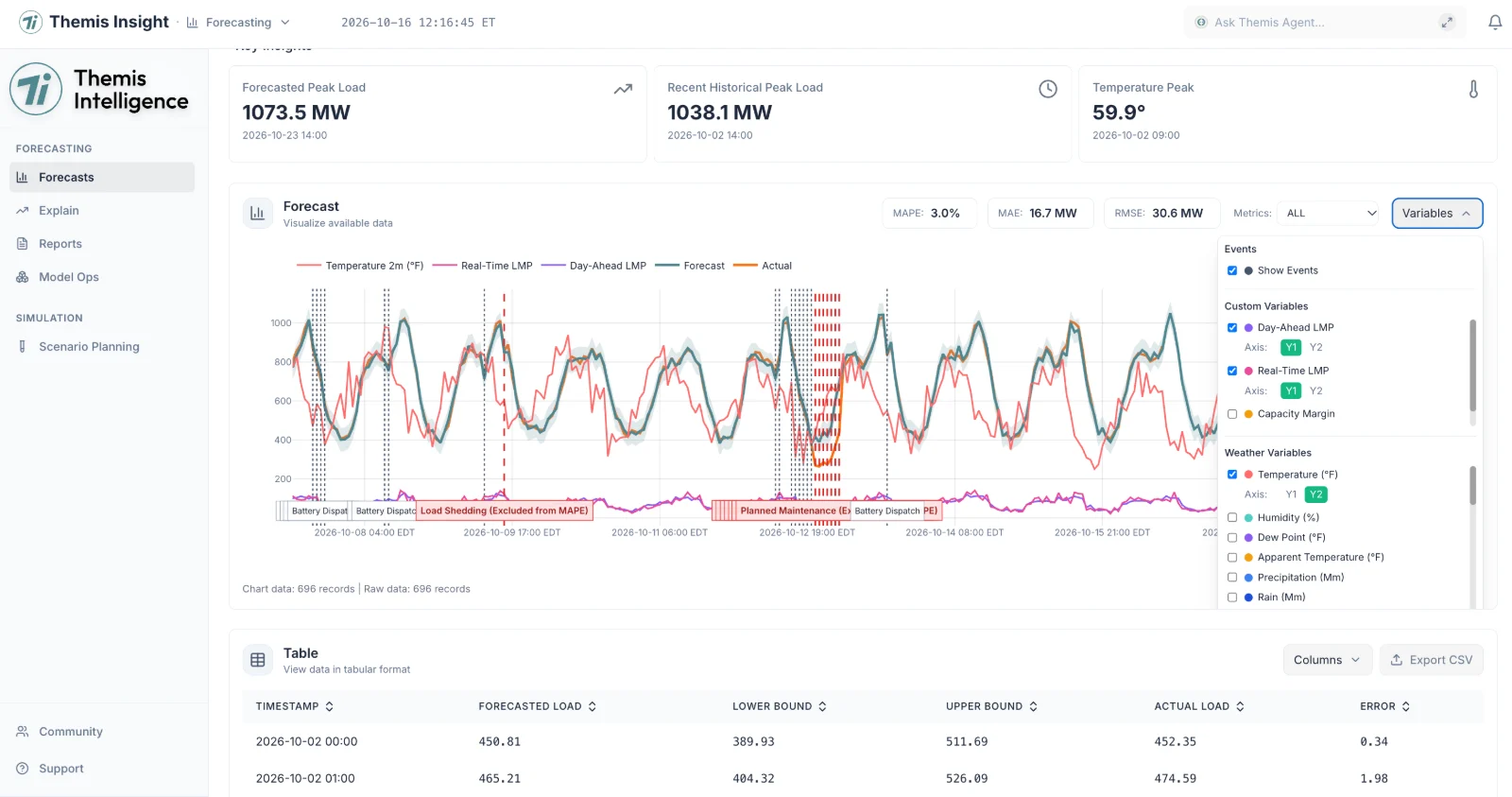
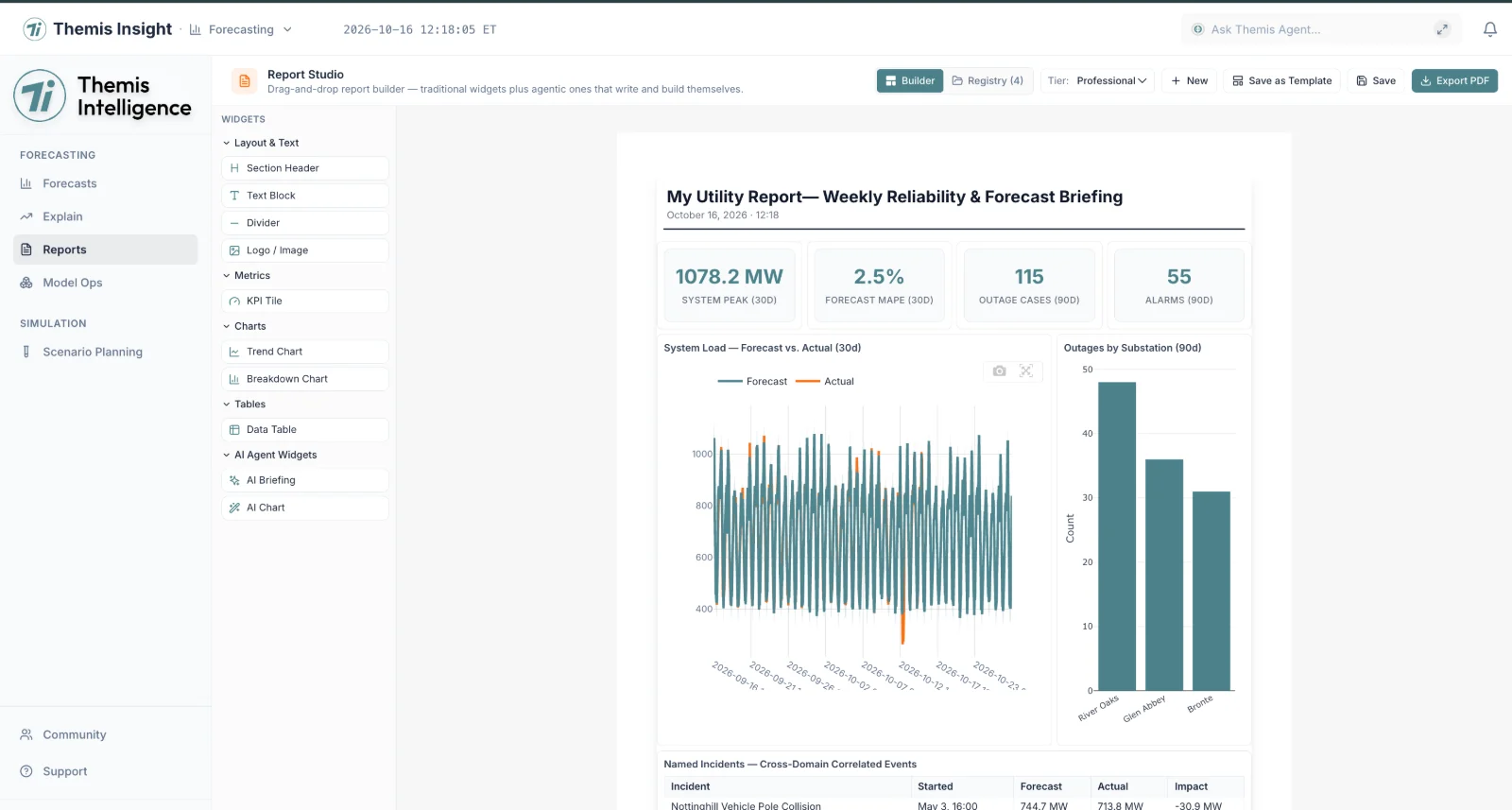
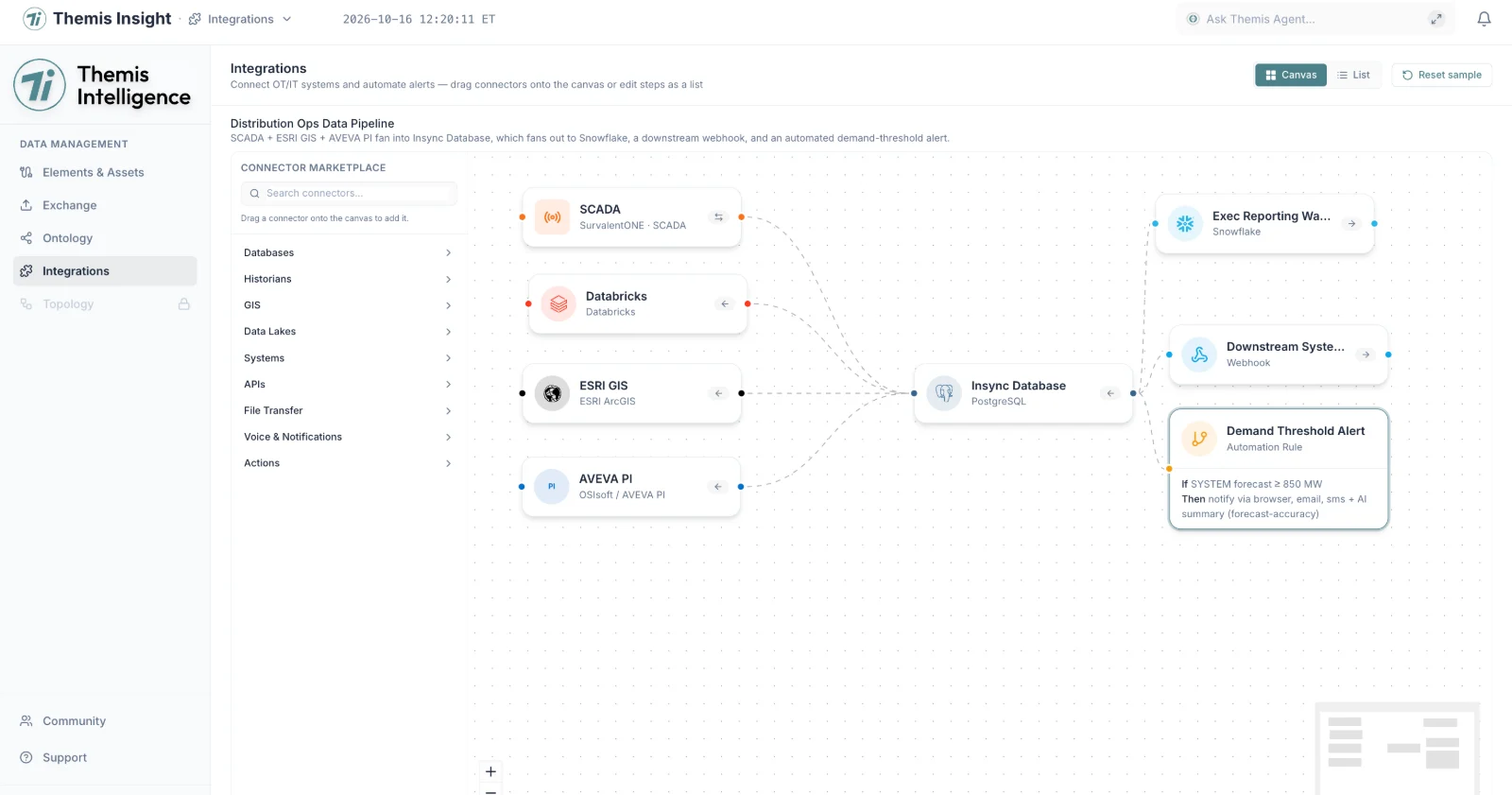
Themis Load Forecasting is delivered through the Insights platform, where utilities can additionally review upcoming demand, compare forecasts with actuals, interact with agents and explore overall asset intelligence.
What can Utilities use Load Forecasting for?
Where load forecasting influences a utility's operational decisions
Anticipate high-demand windows

Improve day-ahead and multi-day purchase schedules

More robust and accurate CVR and Demand-Response Planning

Better operational and switching planning like planned maintenance, or load-transfer activities to customer demands
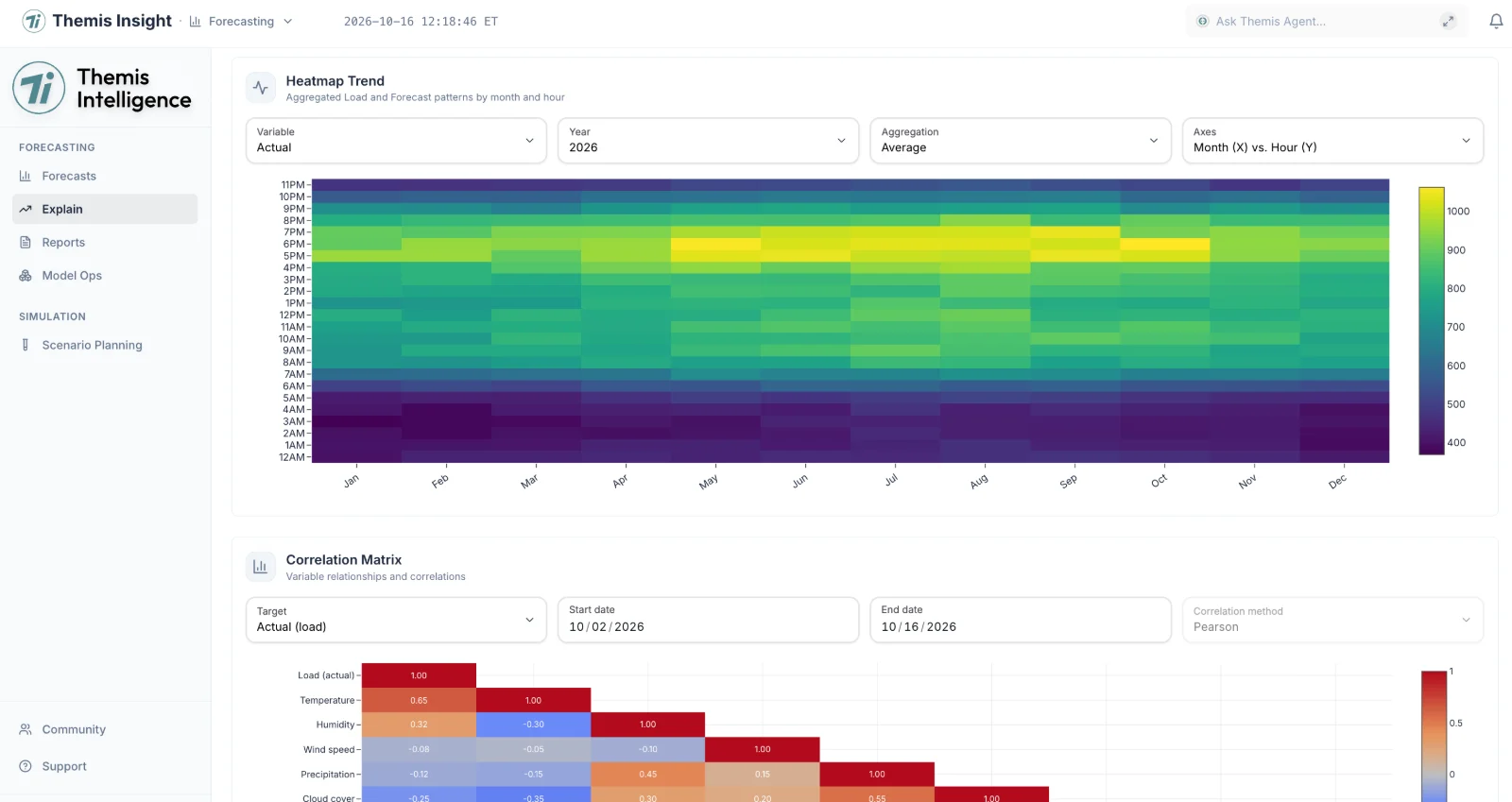
Understand how heat waves, cold snaps, storms, etc may affect near-term demand.
Account for the consumption patterns the utility must serve.
When real-time measurements are unavailable, delayed, or unreliable.
Core Capabilities of Themis Load Forecasting
Tools to Explore, Explain, and Apply Every Forecast
Delivery Model
Themis Load Forecasting is delivered through the Themis Insight platform.
An isolated, cloud-first environment with safe and secure access.
Deployed inside the utility’s own infrastructure for advanced environments.
Cloud services combined with on-premises data residency where required.
Frequently asked questions
See what your grid will need next
Bring us a forecast that keeps missing and we will show you the range, the drivers, and what an operator would see.